
Why Small May Be the Next Big Thing in Singapore Property
In a city where size often matters, a surprising trend is reshaping the landscape of Singapore’s property market: smaller households — and smaller homes — are fast becoming the new normal.
For decades, bigger homes symbolized success. But as families shrink and solo living rises, demand is shifting in ways smart investors can’t afford to ignore.
So why is small suddenly such a big deal?
📉 Singapore’s Shrinking Households: The Silent Shift
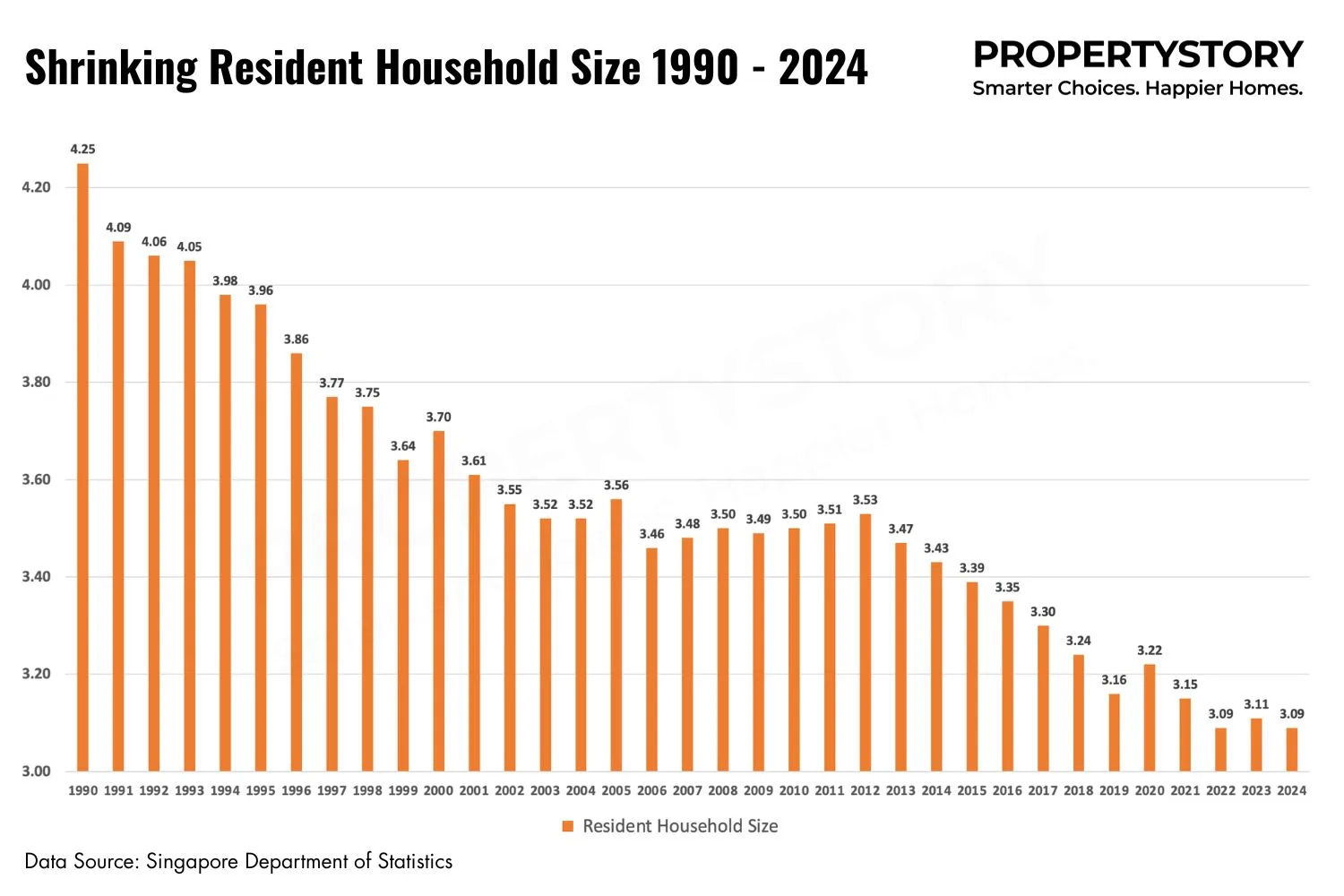
Twenty years ago, the average household in Singapore hovered around 3.6 people. Fast forward to today, and that number has dipped to just 3.1 — and it’s still dropping.
This isn’t just a quirk — it’s a deep demographic shift, driven by:
-
🧓 An aging population living independently or with fewer family members
-
👩💼 Young professionals delaying marriage and living solo
-
👨👩👧 Families choosing to have fewer kids
Singapore isn’t alone in this trend. Across Asia’s top cities, the story is the same: smaller families, smaller homes.
🏙️ Lessons from Asia’s Mega-Cities
Understanding how other major Asian cities are adapting to shrinking household sizes can offer valuable insights for Singaporean property investors.
Hong Kong 🇭🇰
-
Average household size: Decreased from 2.9 in 2011 to 2.7 in 2021.
-
Trend: Significant rise in single-person households; nearly 20% of households consist of individuals living alone.
-
Impact: Surge in demand for micro-apartments and compact living spaces.Census 2021
Tokyo 🇯🇵
-
Average household size: Dropped to 1.92 in 2020, the lowest in Japan.
-
Trend: Increase in single-person households, projected to exceed 50% by 2050.
-
Impact: High demand for small apartments; developers focusing on efficient, compact units.stat.go.jpMainichi
Seoul 🇰🇷
-
Average household size: Fell to 2.25 in 2022.
-
Trend: Growth in one- and two-person households; decline in larger family units.
-
Impact: Increased construction of small apartments and co-living spaces to accommodate changing demographics.통계청
Shanghai 🇨🇳
-
Average household size: Reduced to 2.32 in 2020 from 2.49 in 2010.
-
Trend: Urbanization and aging population leading to smaller households.
-
Impact: Shift towards smaller housing units; policies encouraging development of compact living spaces.
Taipei 🇹🇼
-
Average household size: Reached a record low of 2.5 in 2023.
-
Trend: Rise in single-person households, accounting for over 39% in Taipei.
-
Impact: Growing demand for small apartments and studios; developers responding with suitable housing options.CEIC Data, Taipei Times
🏠 What This Means for Singapore’s Property Market
As household sizes shrink, property preferences shift — and investors who ignore this may end up with units that are harder to rent or resell.
Here’s what’s happening on the ground:
🎯 1. Smaller Units, Bigger Demand
More buyers and tenants are actively looking for:
-
Compact 1- and 2-bedroom condos
-
Efficient 2–3-room HDB flats
-
Developments with flexible layouts and clever use of space
For investors, this translates to:
✅ Faster leasing of smaller, well-located units
✅ Steadier demand from singles and young couples
✅ Lower purchase quantum — making financing easier even in a higher-rate environment
💡 2. Location and Lifestyle Beat Size
Smaller households prioritize:
-
Convenience: Proximity to work, transport, and lifestyle hubs
-
Amenities: Gyms, co-working spaces, community living
-
Integrated developments that offer “everything within reach”
Investors focusing on city fringe (RCR) and integrated hubs are seeing better yields — especially with 1- and 2-bedroom units.
⚠️ 3. Large Units Face Growing Pressure
In the past, large 3- or 4-bedroom condos appealed to extended families. But with smaller households, resale and rental demand for oversized units is softening, unless the property is in a prime location or has a unique edge.
💡 Key Lessons for Investors
✅ Invest in Efficiency, Not Excess
A well-laid-out 700–800 sqft 2-bedroom often outperforms a 1,200 sqft unit that’s clunky or dated.
✅ Follow the Demographics
With 1- and 2-person households becoming the majority, future demand will stay focused on smaller, more flexible spaces.
✅ Watch the Global Lessons
-
In Tokyo, single-person living created a boom in micro-apartments — but too much supply can cap resale gains.
-
In Hong Kong, shrinking families led to sky-high demand for small units — but also fierce competition and affordability issues.
-
In Taipei, nearly 40% of homes are one-person households — so developers cater to studios and lofts, not big family homes.
For Singapore, these examples show why smaller homes are not a fad — they’re the future.
📈 Final Word: Small is the New Smart
As Singapore’s household size keeps shrinking, the next big wave of property growth won’t come from big units — it’ll come from small, smartly located homes that cater to how people actually live.
So if you’re thinking about your next move as an investor, remember:
👉 Focus on efficient layouts
👉 Prioritize location and convenience
👉 Think about who will actually live there — and what they really need
I’ve been helping clients navigate these shifts to find not just a home, but a smart investment that fits the future.
Want to see how this trend could shape your property strategy?
👉 Let’s chat — no pressure, just insights.
Who to contact
For enquiries about Why Small May Be the Next Big Thing in Singapore Property, contact Robert Peng at +65 9751 5995.

- Name
- Robert Peng
- Phone / WhatsApp
- +65 9751 5995
- Agency
- PropNex Realty Pte Ltd
- CEA registration
- R006562I